


This one's late. I spent four days on a motorbike in North Devon instead of writing it, throwing myself at hairpins that were a fair bit beyond my skill. Turned out that was the essay all along. More on that below.
The arrest had been running more than ten minutes, and the room had never been busier.
Compressions going, someone drawing up adrenaline, a second nurse hunting for a vein, a junior reading the rhythm aloud, a porter wheeling in the trolley, three conversations at once. Every pair of hands in that bay was doing something. From the door it looked exactly like a team working. Noise, movement, purpose. The kind of scene that makes an observer think, they’ve got this.
They didn’t have it. The rhythm hadn’t been checked properly in two cycles. Nobody had said out loud what they were treating, or why. The drugs were going in on habit. There was motion everywhere and direction nowhere, and the two look identical until you stand still long enough to tell them apart.
What changed it was a registrar who stepped back from the patient and put her hands behind her back. Deliberately. It’s the first thing they teach you about running a resuscitation and the hardest thing to actually do. The person leading takes their hands off the patient. Not because there’s nothing to do with them. Because the moment your hands are busy, you’ve joined the motion, and the room already has plenty of motion. What it’s short of is someone looking at the whole thing and saying where it goes next.
Here’s what we get wrong, and we get it wrong everywhere, not just at the bedside. We read a busy room as a working room. Activity feels like progress. When the hands are moving and the diary is full and the meeting ran the whole hour, something is surely happening, and it’s uncomfortable to ask whether any of it was going anywhere. So we don’t ask. We let the motion stand in for the direction, because motion is visible and direction is not.
It is easy to keep moving. The harder question is whether you are actually getting anywhere.
Move the same pattern from the resus bay into the meeting room and it looks far more respectable.
Some standing meetings seem to exist mainly so the organisation can prove they happened. Tickbox. There is an agenda, a list of attendees and a set of actions carried forward from last month, many of which will be carried forward again next time.
The meeting continues because it is in the diary. People leave with the dull satisfaction of having attended something. Another set of minutes is filed. Nothing important has shifted.
Six meetings like that can fill a senior leader’s week while barely moving the work forward at all.
This is governance theatre. After you have sat through enough of it, you begin to recognise the different kinds. Some meetings are almost comic. Occasionally, they become genuinely tragic. Most are simply overlong dramas, packed with issues that nobody in the room has the authority to resolve.
We discuss them anyway. We record the discussion. We carry the same actions into next month. Then everyone leaves with the vague sense that something has happened, even though very little has changed.
I have chaired that meeting, so I want to be fair to the people in it. They are not lazy, and they are not foolish. They are busy. Genuinely busy. Expensively busy. That is part of the problem. Busyness starts to feel like the work, even when it has quietly become a substitute for it. Nobody entered the room intending to perform a piece of theatre. It emerged from a hundred sensible decisions to keep things moving, until movement itself became the point.
There is a reason tired systems reach for activity.
Direction is harder. It asks people to stop, look at the whole messy picture and make a choice before everything is clear. Choosing one path also means letting other possibilities go. That takes steadiness, attention and enough mental space to think. It takes what I call Cognitive Oxygen®.
When that oxygen is running low, stillness can feel almost unbearable. Activity is easier. You can keep answering emails, attending meetings and moving actions forward even when you are exhausted. It feels like coping. Sometimes it even feels like progress.
Meanwhile, the move that might help most is the one nobody has the capacity to make: stepping back from the immediate task long enough to see the whole board.
The more we keep moving, the less space we leave ourselves to work out where we should be going.
Even a well-rested team can drift, because once something is in motion it begins to feel real. A meeting moves through its agenda. A team follows the protocol. The process gathers momentum, and that momentum starts to look like authority. Stopping it means being the person willing to ask, “Wait. Where is this actually taking us?”
Red Team Thinking® is designed to make that question routine rather than heroic. It gives people permission to pause a room that is busily agreeing with itself and examine what the activity may be hiding.
What are we trying to achieve, rather than simply get through? If this meeting disappeared tomorrow, what would genuinely be lost? How would we know that we were making progress rather than merely keeping busy?
These questions separate movement from progress while there is still time to change direction.
There is an honest objection to all this. Sometimes movement is exactly what the situation needs. A major bleeding does not need a strategy session. It needs people to act, quickly and well. A leader who stands back reflecting while someone is bleeding has misunderstood the moment. The same is true of some meetings. Their purpose is simply to pass information from one person to another. Trying to turn every one of them into a strategic conversation can waste more time than it saves.
The real skill is recognising what kind of situation you are in.
Some problems are clear enough to reward fast action. Others are still taking shape. In those situations, more activity can make things worse. A team can be working flat out and still have no idea whether it is heading in the right direction. Worse, the busyness can hide that uncertainty from everyone in the room.
Movement becomes dangerous when the situation needs direction first. The difficulty is that, once everyone is moving, it can be remarkably hard to notice which kind of room you are standing in.
The registrar took her hands off the patient, and within thirty seconds the room had a direction it had been missing for two minutes. She didn’t do more. She did less, on purpose, so she could see. That’s the move, and it’s counterintuitive to the point of pain, because every instinct under pressure says do something with your hands, and the most useful person in the room is often the one who won’t.
I spent part of last week learning this again on a motorbike in North Devon, probably riding a little harder than wisdom would recommend. The roads were steep and narrow, with blind bends and hedges that hid what came next. Often, you could see only a few metres ahead. At some point, you had to choose your line and commit. Waiting for the whole road to reveal itself was never an option.
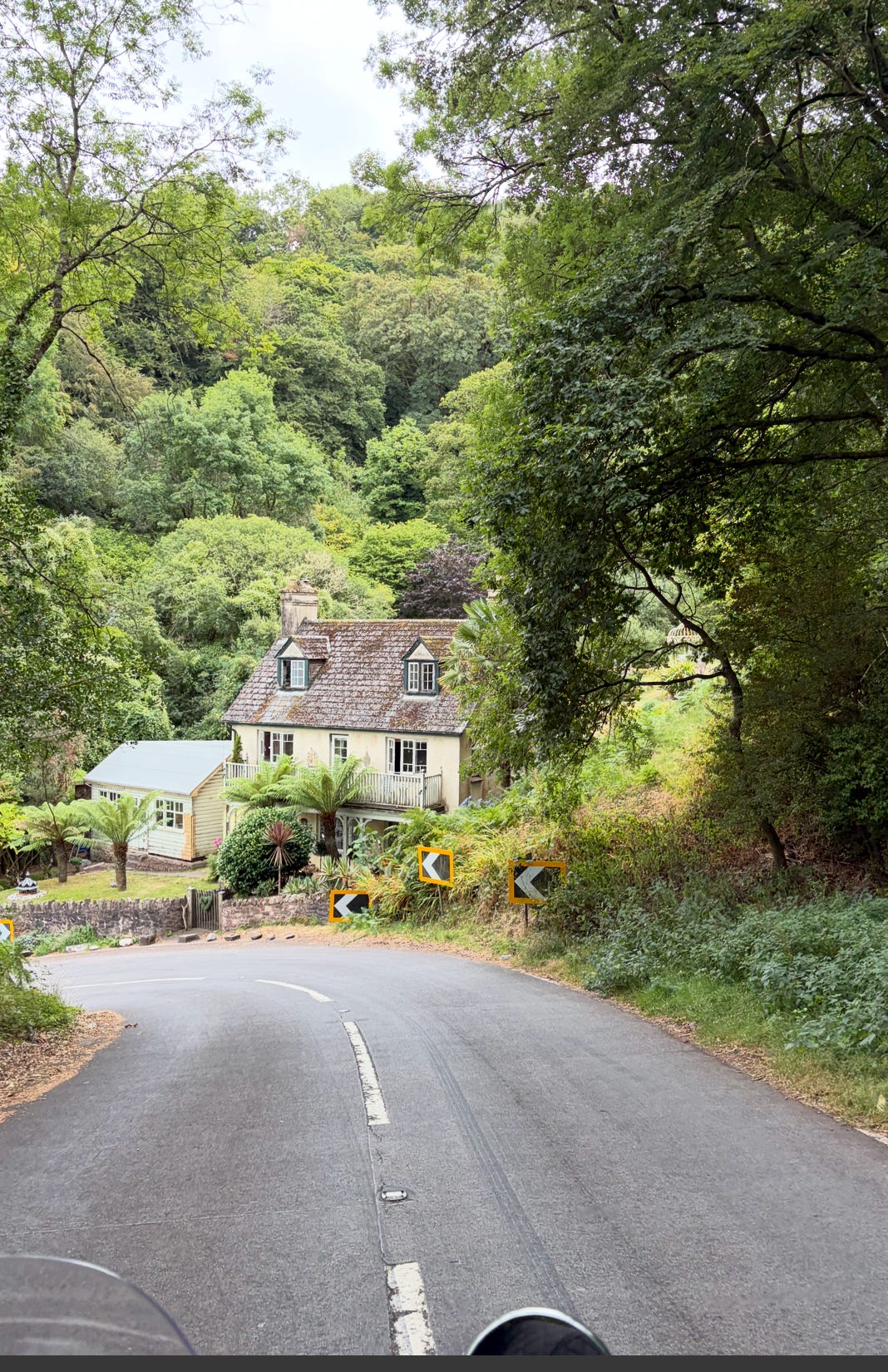
The lesson is simple, and every rider knows it: look where you want to go. Keep staring at the pothole, the verge or the stone wall, and you will begin to drift towards it. The bike follows your attention. Your hands merely make the small adjustments.
It reminded me of teaching a registrar during a difficult procedure: eyes up, hands quiet. Perhaps that is the question to take into the week ahead.
Count the movement. The meetings attended. The emails answered. The hours that were unquestionably full. Then ask the quieter question, the one a full diary makes so easy to avoid: how much of that movement was taking me somewhere? And how much of it was simply movement, because I had not stopped long enough to choose a direction?
A full day can feel remarkably like a good one. They are not always the same.
So this week, once, in the middle of something busy, take your hands off it. Ten seconds of doing nothing, so you can see where it’s actually going. Motion will not miss you. Direction might.